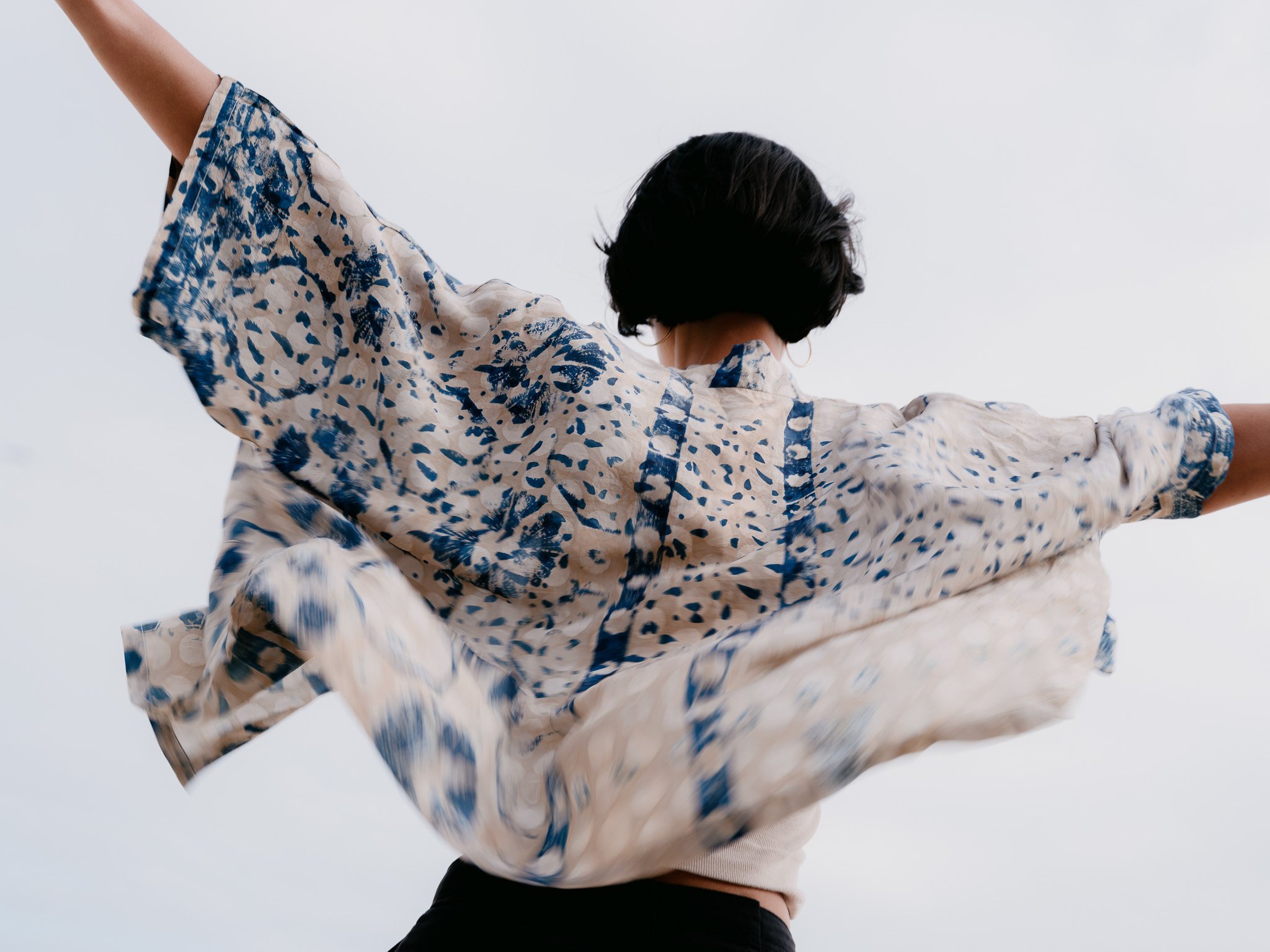
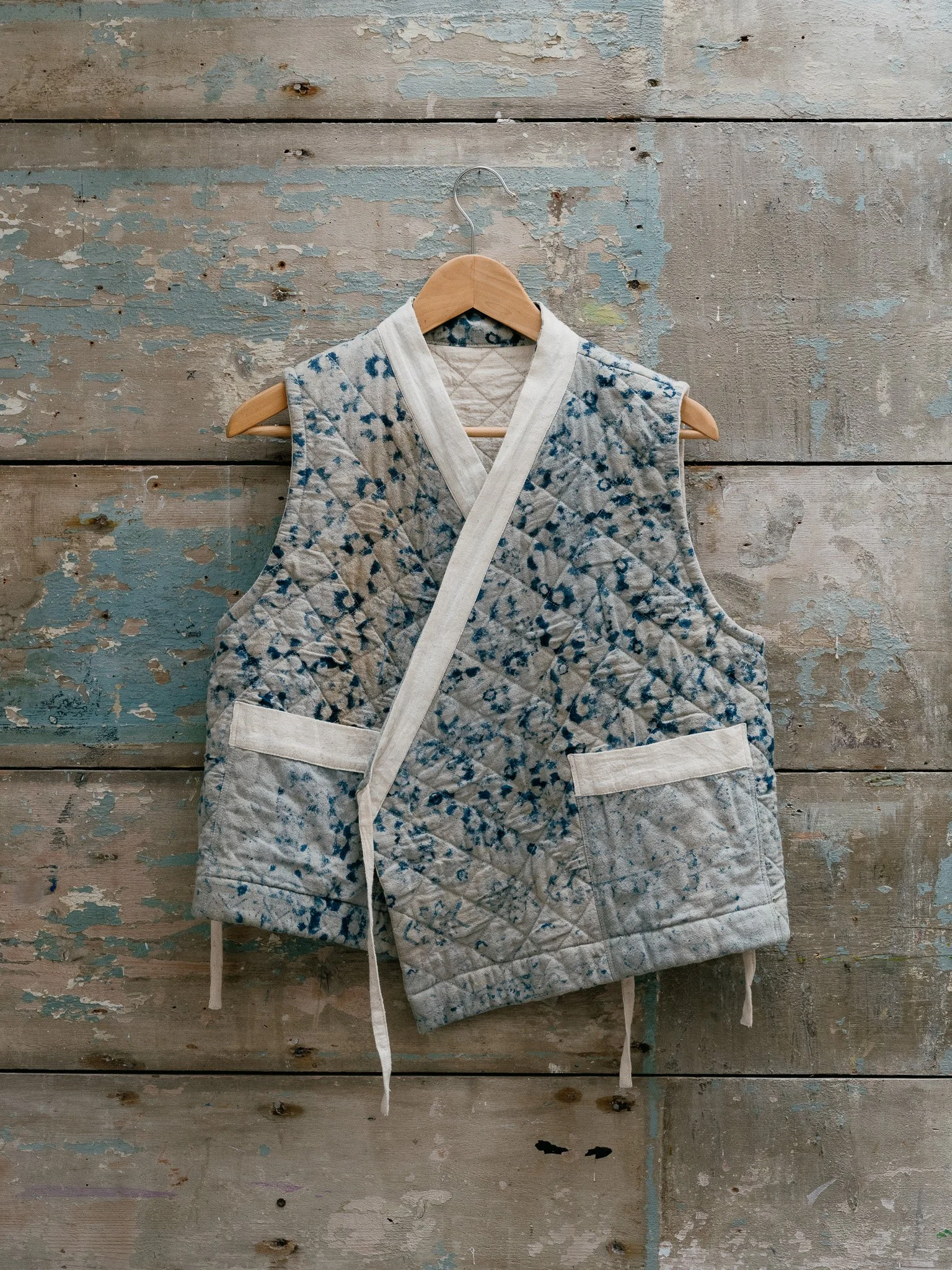
Studio Astray is an evolving collaboration between UK textile artist and designer Sara Lowes, block-print and embroidery artisans in Gujarat, India, and pattern cutters and tailors in Cornwall, UK. Together, they repurpose fabric waste into unique, organic garments, quilts and textiles, honouring the traditionally sustainable craft techniques of indigo dying, hand embroidery and block-printing; working to preserve and highlight their beauty and value.

Origins
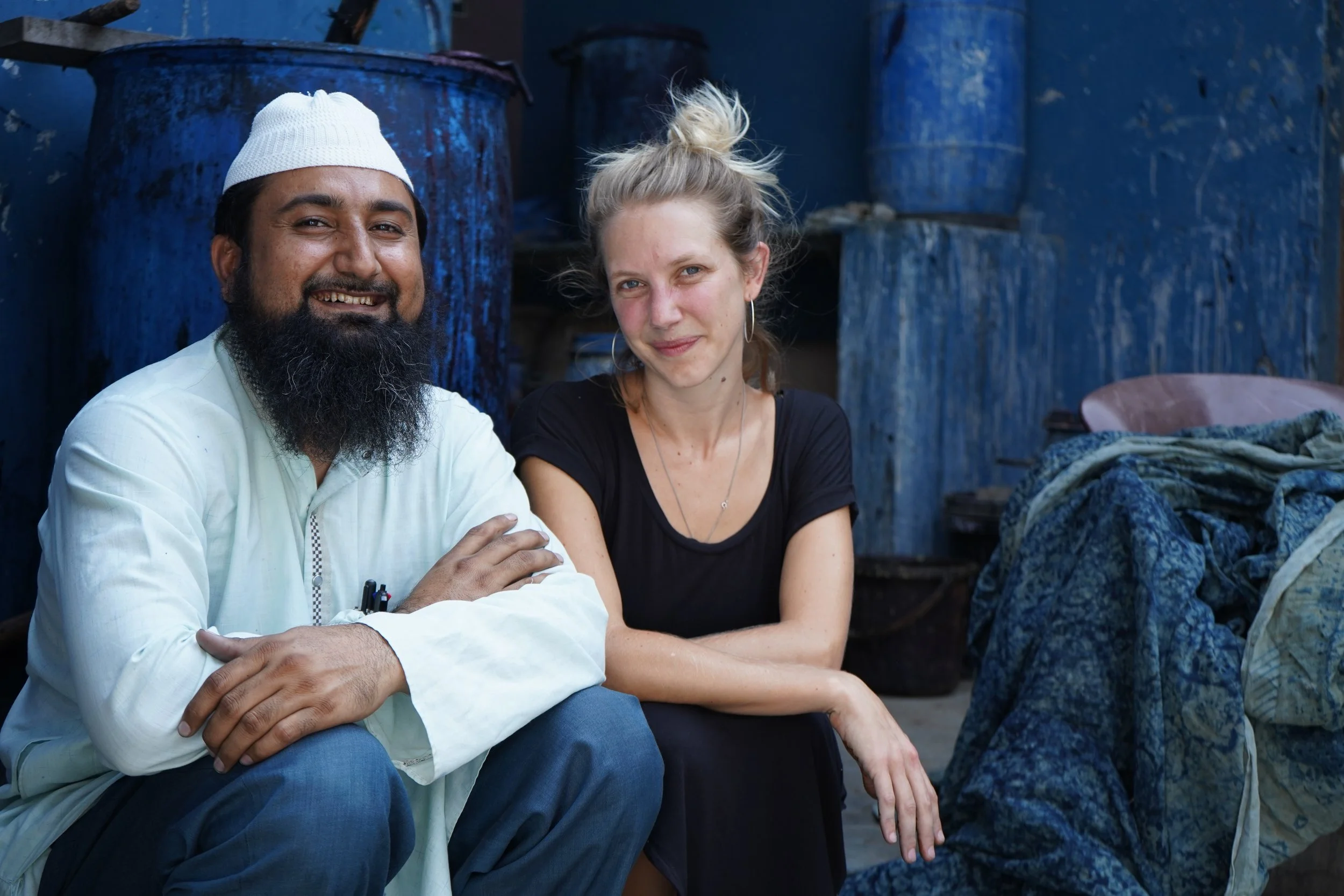
Sara is a textile artist and designer passionate about sharing stories through cloth. In 2018, feeling disconnected from fast-paced production, she turned to the long-admired swatches of organic block-printed cottons and embroidered sari trims stapled in her sketchbook, and retraced their origins.
This creative journey led her to Gujurat, home to deep-rooted textile traditions, including Ajrakh block-printing, a traditionally eco-friendly and complex craft.
While learning alongside Sufiyan Khatri, a tenth-generation Ajrakh block-print master, she became captivated by Achadiya — the table cloths that are laid over the print tables prior to printing, that absorb layers of natural dyes, shapes and patterns during this intricate printing process.
Inspired by Sufiyan’s teaching and the quiet, organic beauty of these overlooked textiles, Sara founded Studio Astray.
Sustainable Fabrics
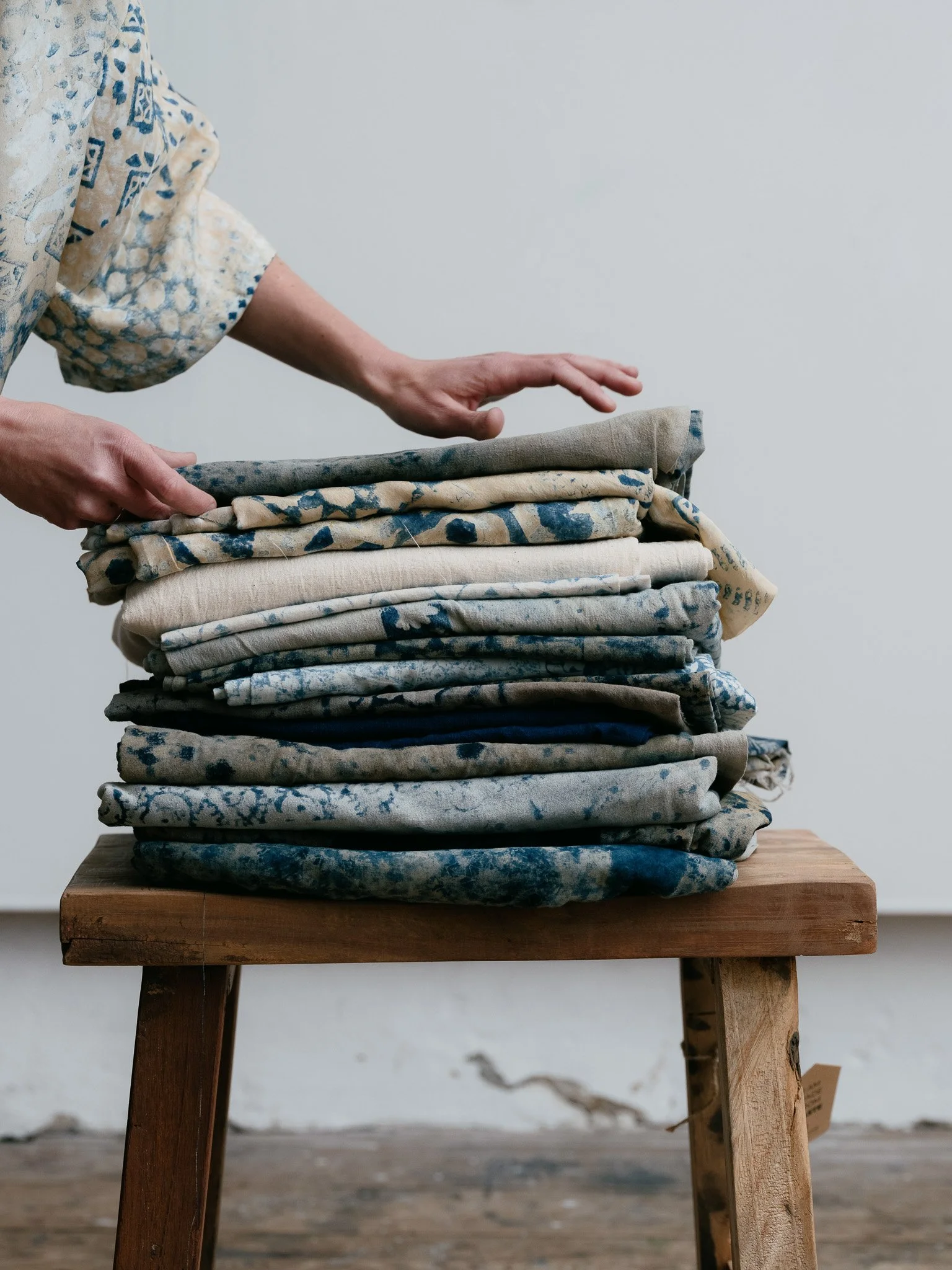
Sustainability lies at the heart of Studio Astray. The collections are shaped by the meeting of repurposed Achadiya cotton and silk, and Kala Cotton. The natural colours, textures and patterns of these textiles guide each design.
Cotton Achadiya
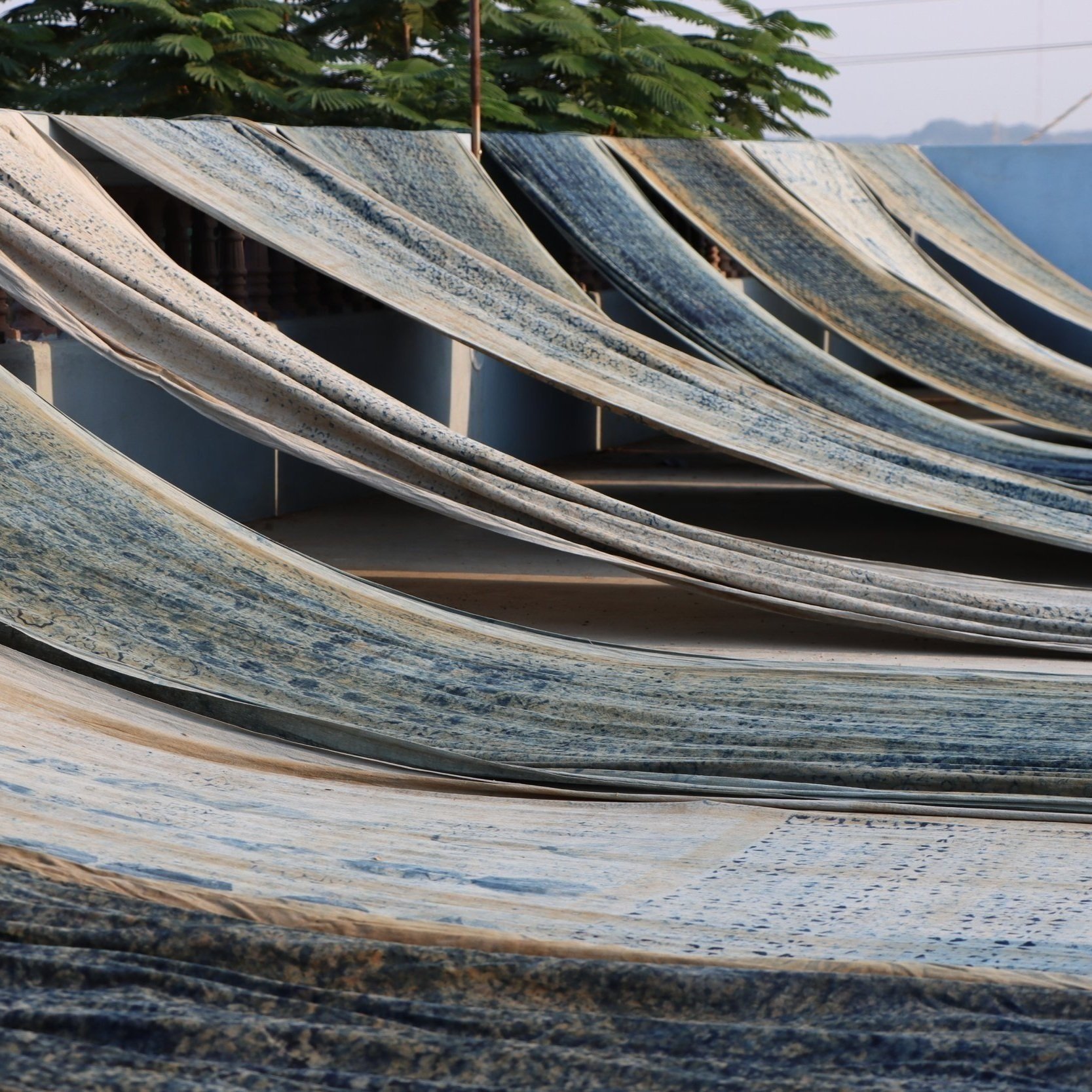
Achadiya is the dropcloth that block printers lay over their tables prior to the printing process. Over time, these cotton cloths absorb layers of marks, patterns and colours, capturing irregular shapes and distorted Ajrakh motifs, tracing the shadow of the artisans’ movements. These cotton cloths are recycled, washed, dried in the sun, and weathered by the natural elements until eventually discarded.
Rich with heritage and shaped by time and process, each indigo canvas carries layers of tradition, memory and the marks of making — becoming a textile artwork in its own right.
Silk Achadiya
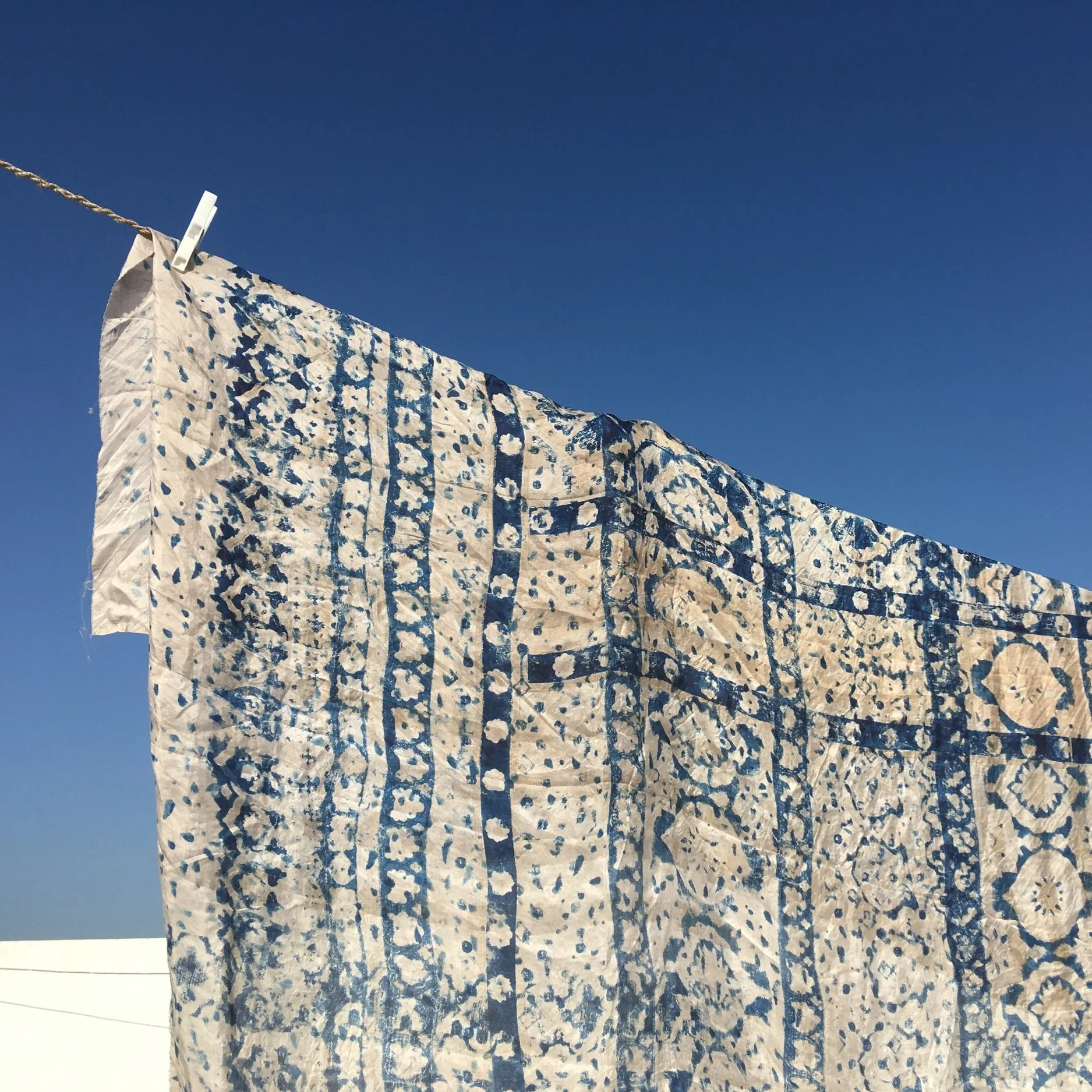
Exploring this concept further with Sufiyan, Sara experiments with alternative fabrics as table cloths, exposing them to the print process for various time frames, and capturing them at different stages of their transformation process. The silk Achadiya, like its cotton counterpart, evolves with every step in the artisans’ process, making each piece beautifully unique.
With the silk being lighter and more delicate, different imagery emerges: dappled light on water; branches dancing in the wind; cascading blossom; an ancient mosaic. The depth of these fabrics has a poetic rhythm and each is a piece of art in itself.
.
Kala Cotton
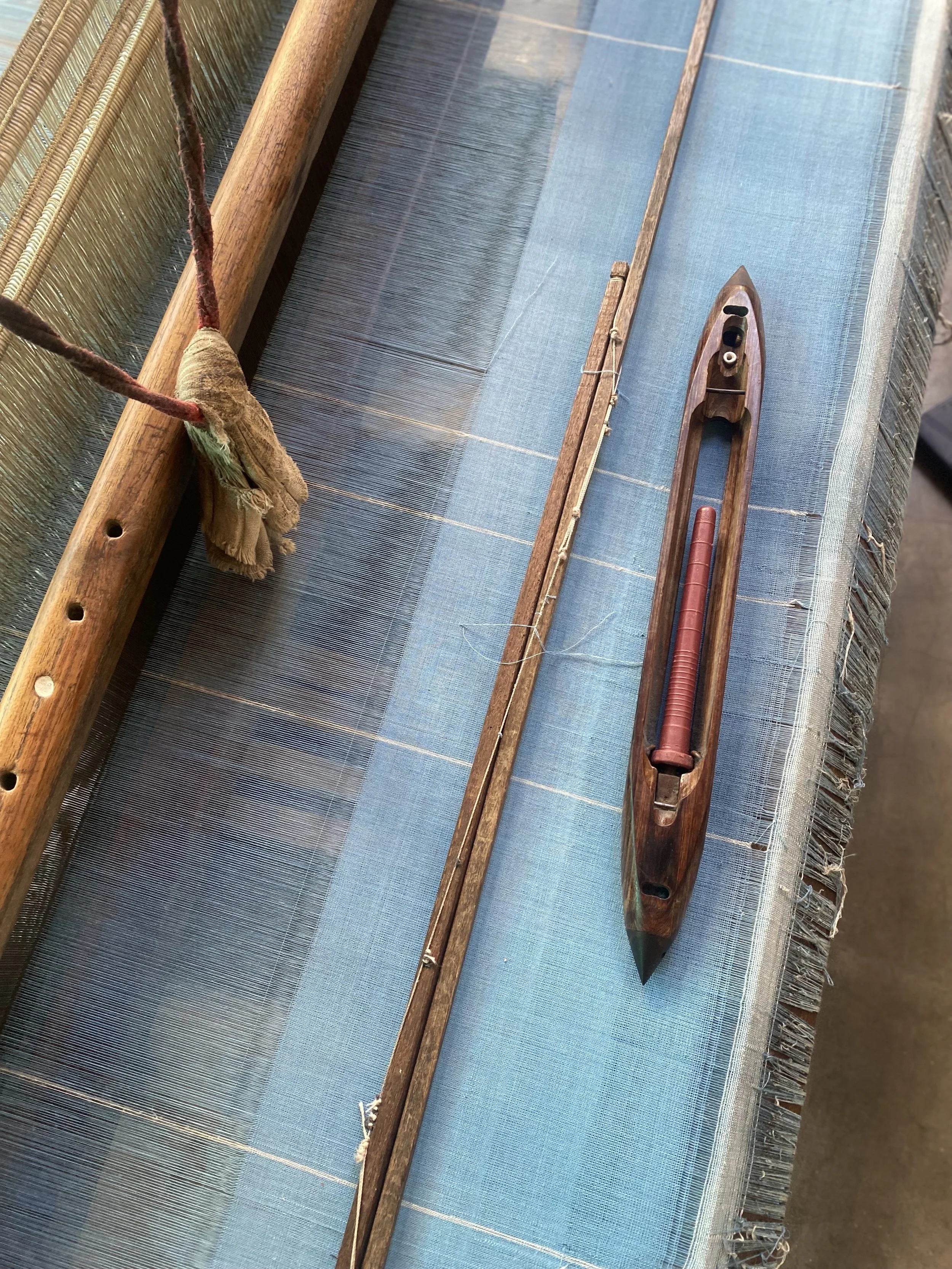
Alongside Achadiya cloth, Sara works with traditionally grown organic Kala Cotton from Kutch.
Indigenous to the region, Kala Cotton is a rain-fed fibre, grown without synthetic fertilisers or pesticides and dependent on generations of agricultural knowledge and local conditions. Woven on handlooms, it has a rich texture and softness that reflects the character of the fibre and the rhythm of the making process. Its natural off-white tones and richly dyed indigos sit alongside repurposed Achadiya cloth to create textiles that celebrate both resourcefulness and tradition.
Every off-cut is saved and transformed into new textiles. Working with women artisans in Kutch, Sara reimagines traditional embroidery techniques and repurposes remnant fabrics into quilts, cushions, and textile collages. Each piece celebrates the beauty of mutually creative collaboration and the creation of something meaningful and durable from what might otherwise be discarded.
Circular Design & Collaboration
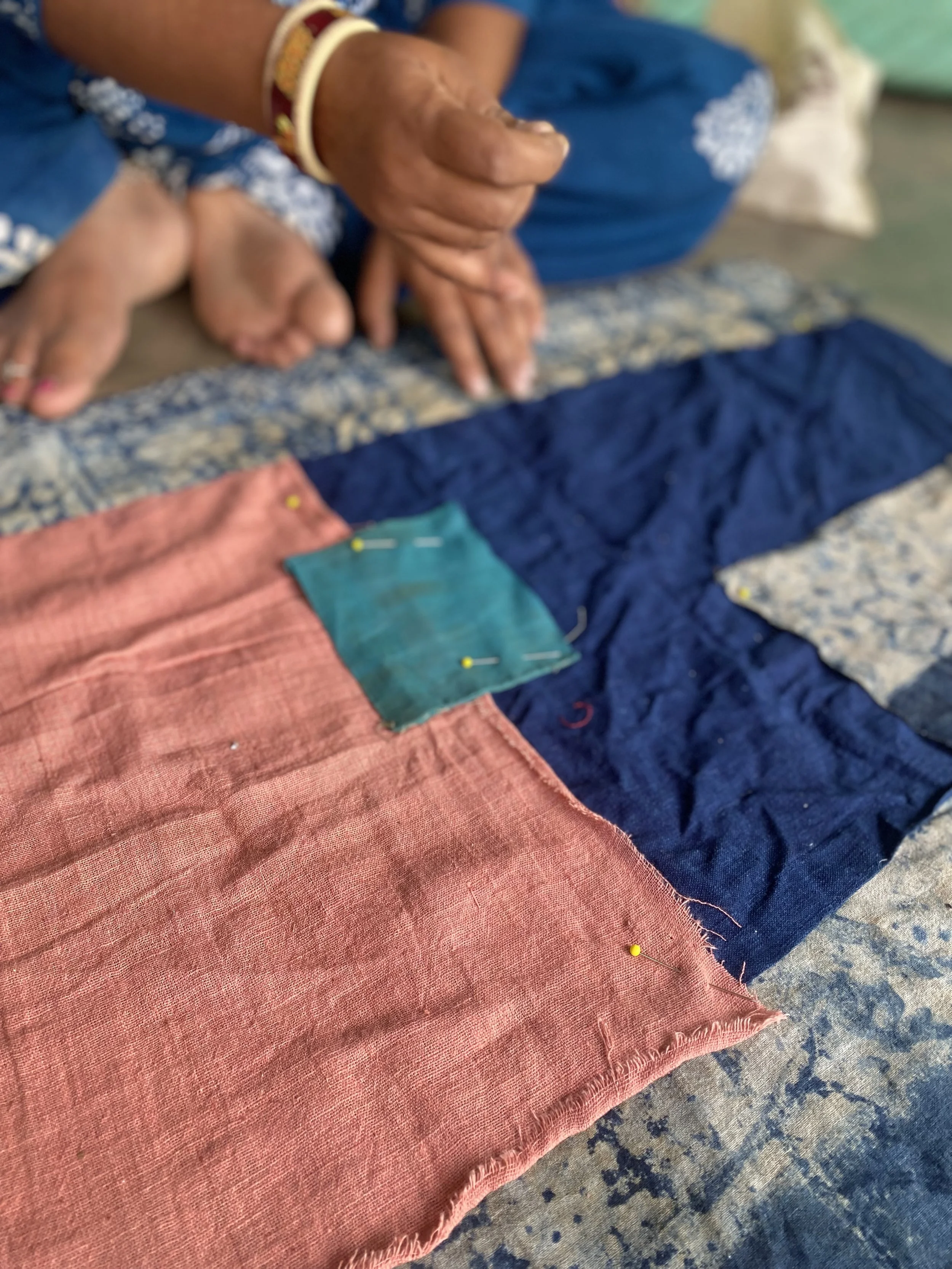
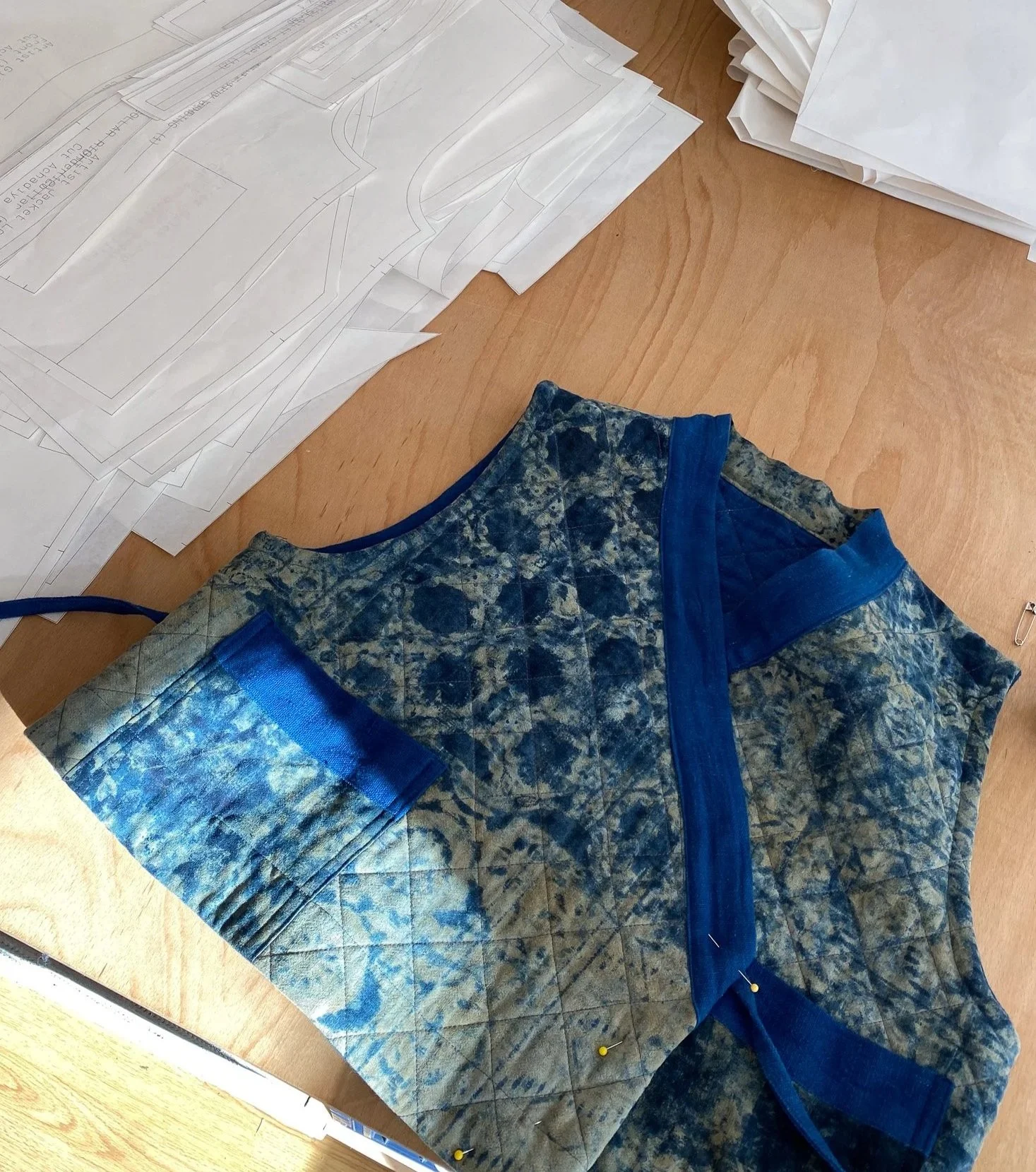
Just as Sara works closely with artisans in India, Studio Astray collaborates with pattern cutters and makers in Cornwall to transform these fabrics into timeless, versatile garments that balance practicality and elegance. Each piece is quilted, embroidered, and finished by hand in small batches, with offcuts inspiring hand-stitched embroidery and visible mending details ~ ensuring that nothing goes to waste and that the stories within these textiles continue to evolve.
Garment Design & Production